
Part-time MSc Student Spotlight: Sam Birch
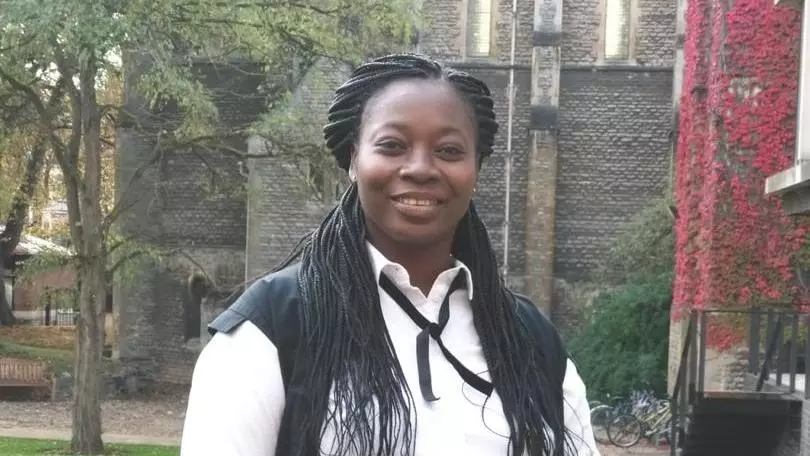
Sam is a part-time student who joined the Department in October 2024, following a BA in Economics at the University of Manchester. While at Manchester, he developed an interest in entrepreneurship and launched his first business, which received funding from a student business accelerator.
The venture ultimately failed, but Sam used what he’d learned to found Dubsy & Co. - an online retail company that remains his full-time job. Running the company has taught him time management, resourcefulness, persistence and a constant willingness to learn, skills that are essential to his MSc.

Why do you study sociology?
My interest in Sociology stems largely from my upbringing. Growing up in South London in a British-Caribbean household, I was exposed to many cultures and social groups from a young age which naturally made me curious about the socioeconomic structures I saw around me.
I'd often ask myself, how is it that one family in Brixton can be living off income support in council housing while on the same street another is sitting comfortably in a £1 million townhouse? Or why is it that in a highly connected city of almost 9 million people, so many of us suffer from feelings of isolation and loneliness?
Contemplating the answers to these types of questions always fascinated me, and my curiosity only intensified by living through the seismic economic, political and cultural changes we've all experienced in the 21st century.
What first attracted you to the Department?
When researching Master’s programmes, the Oxford MSc Sociology course stood out for its rare empirical focus. With an undergraduate degree in economics, I already had a strong foundation in statistical analysis and empirical modelling, and I felt this course aligned well with my skills and research goals.
What do you enjoy most about being a student at Oxford?
The range of topics and skills covered in a relatively small number of modules has been the biggest plus. Between Sociological Analysis and the option papers (my favourite being Social Stratification), we’ve studied life-course research, neighbourhood effects, social mobility and of course, rational action theory.
Technical papers like Statistical Methods and Causality might be less enticing for some, but they develop core research skills that let you analyse and test social phenomena and uncover meaningful relationships.
Beyond academics, I’ve met so many kind, intelligent people in the Department, some who I’m sure will be friends for life. Being around curious, like-minded people is rare and one of the main benefits of studying here.

What are your research interests?
I’m primarily interested in how income and wealth inequality affect individual wellbeing and society more broadly.
My thesis aims to disentangle the socioeconomic consequences of two distinct but related forms of economic disparity: income inequality (the flow of money) and wealth inequality (the stock of assets). While much academic and political debate focuses on income, this project aims to determine whether the concentration of wealth exerts a unique and perhaps more potent influence on social outcomes such as interpersonal trust, civic engagement, and individual wellbeing.
The project is structured in two stages. First, a static cross-country comparison of nations using most recent data, showcasing the relationship between wealth and income inequality on a range of socioeconomic indicators centred around crime, health, education, and trust. This is followed by a multi-level cross-national analysis utilising individual-level data from the ESS and WVS to compare how different national levels of income and wealth inequality correlate with a range of individual-level socioeconomic indicators across 28+ countries.

What do you hope to do when you finish your MSc?
I'm doing this course mostly out of personal interest to better understand the world and society I live in. I will likely continue running my company after graduating, but I'm open to pursuing research in the field of economic inequality and its societal effects, which I believe is one of the most pressing issues of our time.
What piece of advice would you give to prospective students?
Don’t be nervous. The Oxford name and history can feel intimidating, but once you’re here you’ll find a welcoming, encouraging environment with people from diverse backgrounds. If you apply yourself, work hard and aren’t afraid to make mistakes, you’ll learn a lot and inevitably excel.
What do you enjoy most about living or studying in Oxford?
As a part-time student I live in London and commute to Oxford, so my experience differs from many full-time students. For me, Oxford is a small oasis: a 50-minute train ride takes me to a quiet, idyllic place with incredible libraries and study spaces - a nice contrast to the chaos of London.
What interests do you have outside of sociology?
Thanks to my company and the ability to work remotely, I’m an avid traveller and spend three to four months a year outside the UK. In recent years I’ve visited Japan, China, Thailand, Barbados, Portugal, Poland, Türkiye and the Philippines, and I plan to keep exploring.
I’m also a huge motorsport fan and have raced karts competitively since age 13, continuing to race with the Oxford Motor Drivers’ Club in the National University Karting Championships while studying here.