
Meet Kayla: A conversation with the first Anthony Heath Scholarship recipient

Last year, we were delighted to launch the Anthony Heath Scholarship, which covers course fees and provides a living stipend for UK students undertaking the MSc in Sociology.
The scholarship honours our first Head of Department and his pivotal role in shaping the Department of Sociology at Oxford, as well as his remarkable contributions to British sociology.
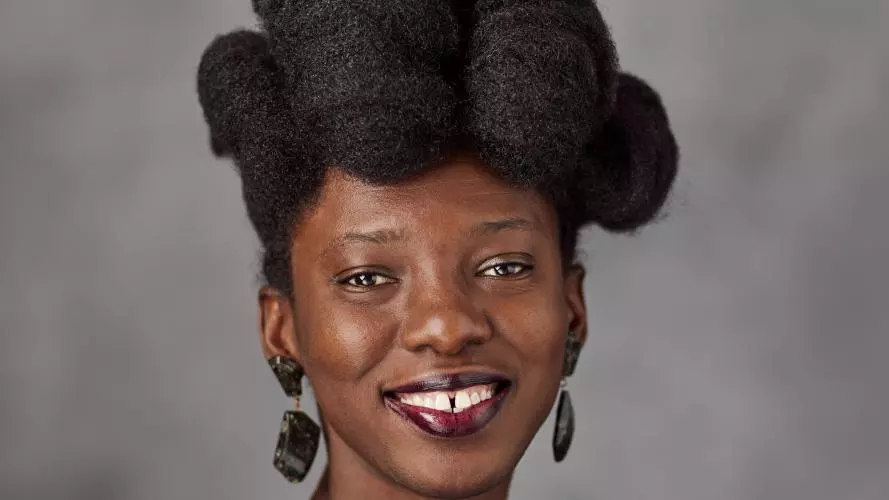
The first recipient, Kayla McKinnie, has just started her MSc, and we caught up with her to hear about her journey to Oxford, what receiving the scholarship means to her, and what she hopes to get out of the year ahead.
Could you tell us a little about yourself and what brought you to sociology?
My name is Kayla, and I am from a small town just outside Edinburgh. I just finished my BA in Politics, Philosophy and Economics (PPE) and am thrilled to be starting the MSc in Sociology.
During my undergraduate degree, I had the opportunity to study papers in Sociological Theory and Political Sociology, and I became so obsessed with the ideas I was coming across that I began seeing them in the most mundane places. I often found myself thinking of whatever I saw on the news or discussed with a friend in terms of social capital, networks, norms, and the like.
I became particularly interested in gendered rhetoric in the news, which motivated me to research the topic; this curiosity pushed me to write my MSc research proposal and pursue sociology at the postgraduate level.
I come to sociology first and foremost as an empirical researcher. I’ve worked on short research projects at Sarah Lawrence College in New York, Huazhong University of Science and Technology in Wuhan, and most recently, in the Department of Mathematics and Statistics at Banasthali Vidyapith in Rajasthan.
What I love about research is moving along the arc of a project: starting with some kind of problem, finding a way to understand one piece of it, and then explaining that understanding to someone else.
The problems I keep returning to are always about social institutions and how they shape collective behaviour, which is why I was drawn specifically to sociology.

What made you want to study the MSc at Oxford?
I’ve been lucky to spend time at universities in the US, China, and India, and I still find myself drawn back to Oxford because there is no other place like it.
On any given day, you might be in a conversation with a philosopher and a biologist, or a historian and a computer scientist, and the people you speak with are from all over the world. That mix of perspectives constantly pushes my thinking in directions I wouldn’t have found on my own.
The Sociology Department specifically appealed to me because of its focus on research and empirical methods, as well as its strengths in political sociology and gender.
What areas of sociology are you particularly interested in?
I am very interested in political sociology, with a particular interest in political communication and social cleavages. I want to understand how social categories shape behaviour, and the role rhetoric plays in this process. These questions also interact with broader debates on stratification, identity, and nationalism.
My curiosity about these questions often grows from conversations I have with people or from things I observe about the world. I then find myself wanting to understand them beyond my own point of view. For example, I’m drawn to debates about nativism, especially as it relates to gender, which I can trace to hearing rhetoric from individual people and wanting to understand how it functions.
I also think coming from quite a traditionally “non-Oxford” background and then coming here has motivated my interest in how class shapes collective behaviour. I have seen both sides, as it were, and I want to understand how this works across society, not just from my own vantage point.
What difference has receiving the scholarship made to your ability to undertake the MSc?
I am incredibly honoured and thankful to be the first recipient of the scholarship. Put simply, I wouldn’t have been able to take up the MSc without it, and as someone who wants a career in research, that would have been devastating.
Masters degrees are often overlooked when it comes to funding, which means the masters stage can act as a filter. Without support at that point, the students who fall away aren’t the weakest candidates, just the ones who can’t pay. I’m proud to be joining a Department that invests in people regardless of their financial circumstances.
The scholarship honours Professor Anthony Heath and his commitment to empirical sociology that engages with real-world problems. Does that approach resonate with your own interests?
Very much so. There is no shortage of social problems needing attention, and in the modern world we have more data than ever before. But data doesn’t explain anything on its own. What I admire about Professor Heath’s work is the use of rigorous methods either to create new data where none otherwise exists or to transform the noise of existing data into answers to questions that matter.
Looking further ahead, where would you like sociology to take you?
I would like to work in research, though whether that’s in academia or at an NGO, think tank, or charity remains to be seen. I know I want to do work that is intellectually challenging and, more importantly, makes a difference, and the MSc is the next step towards that.