
Alumni Spotlight: Megan Scott, Principal Health Analyst, UK Health Security Agency
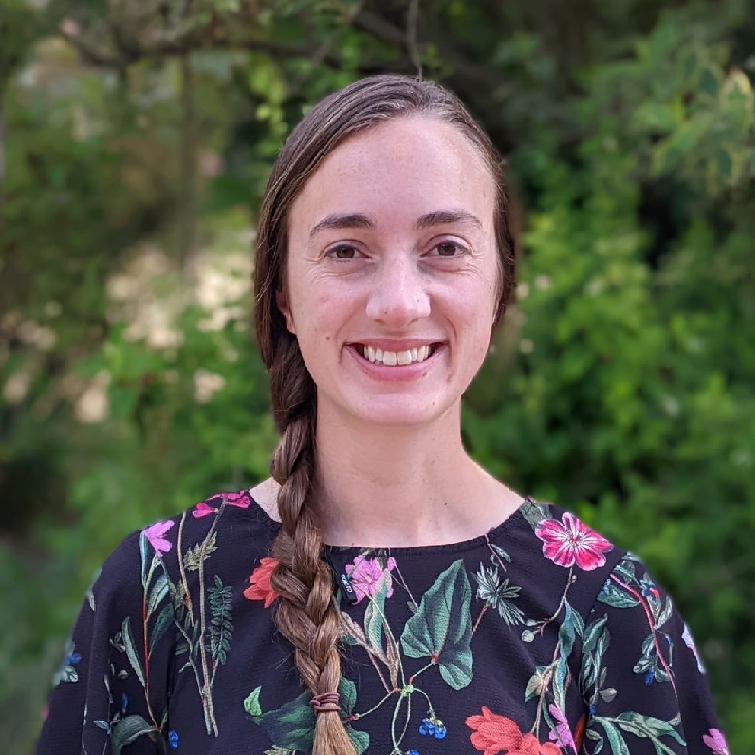
Dr Meg Scott studied Philosophy, Politics and Economics (PPE) as an undergrad at Oxford, and was inspired to continue her sociological training, completing an MSc and DPhil with us from 2014 to 2019. After graduation she worked in various roles within the UK Civil Service, and is now a Principal Health Analyst and Government Statistician within the UK Health Security Agency.
What inspired you to study sociology?
I was interested in better understanding what contributes to societal inequalities, including outcomes in education, employment, health and family life. I enjoyed reading sociology papers as an undergraduate and wanted to pursue performing novel research myself.
What attracted you to the Department of Sociology in Oxford?
I had excellent sociology tutors as an undergraduate, and was especially inspired and encouraged by Tak Wing Chan’s research and supportive tutorial teaching. I also wanted to pursue more quantitative research, which Oxford Sociology was well placed to support.
Tell us a bit about your research interests while at Oxford:
My DPhil explored how gender and socioeconomic background shape young people’s transitions from education into work. I examined how factors such as parental occupation and education, attitudes towards sex and gender, job values, and occupational preferences influence those transitions.
Were there any particular skills or approaches you developed during your studies that have been valuable since graduating?
I think of my MSc and DPhil as an apprenticeship in designing, conducting, and evaluating quantitative research. Although I now work on different topics, I use many of those skills every day, especially advanced statistical methods, research design, practical coding, and working with large, complex datasets.

My supervisors Colin Mills and Richard Breen also challenged me to think about the real world implications of any research. I came away with a greater understanding of the UK social survey landscape and a passion for making the most of the data that we have!
What do you do now?
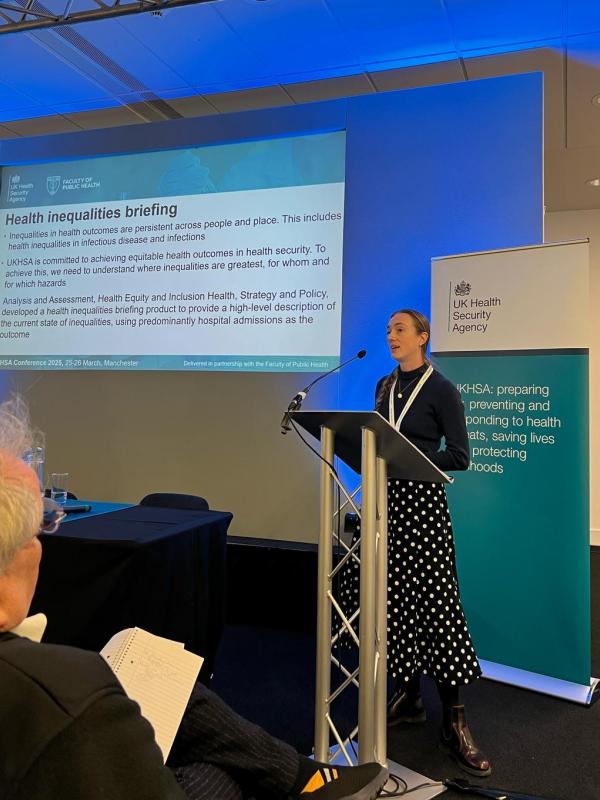
I am a Principal Health Analyst and Government Statistician in the UK Health Security Agency. I lead a portfolio of analyses on current health inequalities in infections and infectious diseases in England and Wales.
With my team of data scientists, epidemiologists and statisticians, we adapt our research to respond to government policy priorities and infectious disease concerns.
Has your work allowed you to address or better understand real-world social issues?
I lead analysis on crucial public health priorities, to inform government policy and decision-making. This includes rapid response to public health incidents, where analysis needs to be completed in days or weeks, for example, providing national infectious disease surveillance for the Meningitis B incident and for other infectious diseases of concern. It also includes longer term projects to better understand inequalities in morbidity and mortality due to infectious disease.
My recent collaborative projects have included looking at the estimated annual deaths and hospitalisations prevented by routine childhood immunisation and the inequalities in emergency hospital admission rates for COVID-19 and flu patients across England.
I love working with other analysis professionals across government departments, such as Strategy, Policy, Health Equity, and Immunisations colleagues. This means I am constantly learning, improving my statistical methods, and how I present research findings for different needs.
It is brilliant to see research and analysis being used in real-time, to inform health system decisions, such as on vaccination, incident management, and winter response.
What achievement are you most proud of in your career so far?
I am most proud of our collaborative report on Health Inequalities in Health Protection, published in May 2025.
This was a comprehensive report quantifying current inequalities in population outcomes for all health threats within the remit of the UK Health Security Agency (UKHSA). This provided up-to-date information on inequalities to inform health system strategy, including the UKHSA 2026 strategy, and provides a baseline for future policy evaluation.
Emergency hospital admission rates for infectious diseases were nearly twice as high in the 20% most deprived areas compared to the least deprived. Individuals living in the 20% most deprived areas of the country were over seven times more likely to have an emergency admission to hospital for tuberculosis and six times more likely for measles, compared to those in the least deprived areas.
Those living in the North West experienced emergency hospital admission rates for infectious disease around 30% higher than the national average, and over 50% higher than those in the South East.
Impacts from environmental hazards were also linked to deprivation. Areas with higher levels of poverty often have greater air pollution, and people living in these places are more likely to face the effects of adverse weather, due in part to inefficient home insulation and fuel poverty.
The report highlighted the way in which these inequalities are amplified for people within inclusion health groups, such as people seeking asylum, people in prison, people experiencing homelessness, and people who inject drugs. They were often disproportionately impacted by a range of infectious diseases.
In addition to the social, physical and mental health costs to our communities, health inequalities created a significant economic burden. It was estimated that inequalities in emergency infectious disease hospital admissions cost the NHS between £970 million and £1.5 billion in 2022/23.
We were awarded the Analysis in Government Inclusion Award in recognition of our collaborative approach to analysis, and our communication of inequalities by deprivation, ethnicity and region.
The report received widespread media attention (including coverage in the Financial Times, Guardian, and the British Medical Journal) and has been presented at over 20 events on reducing inequalities. The Chief Medical Advisor commended it to UKHSA’s Board as “an excellent report… our next steps are to identify cost-effective policy actions to reduce these inequalities”.
What's next in your career journey?
I am currently on maternity leave for my third baby. When I return to work, I will continue to work on mitigating health inequalities, through research, analysis and policy creation, within UKHSA and the national government.
What piece of advice would you give to current students?
There are exciting and fulfilling research and analysis opportunities within the Civil Service. I have loved working here and have had interesting posts within the Economic and Social Research Council, Cabinet Office, Department for Digital, Culture, Media and Sport, and now the UK Health Security Agency.